
Seven and a quarter inches is the standard circular saw size for a reason: it cuts through a two by four at any bevel angle, it takes the cheapest and most widely available blades, and it is light enough to use one handed on a sheet.
What separates a good one from a bad one is almost never the motor. Every saw here has enough power for framing lumber and sheet goods. What differs is whether the base plate stays flat, whether you can see the line you are cutting, and whether the depth and bevel adjustments hold where you set them.
That last point is the one people discover after buying. A saw whose bevel creeps under vibration will quietly ruin a day of work.
Top picks at a glance

DEWALT 7-1/4-Inch Circular Saw
- 15
- About 8.8 lb
- 0 to 57 degrees
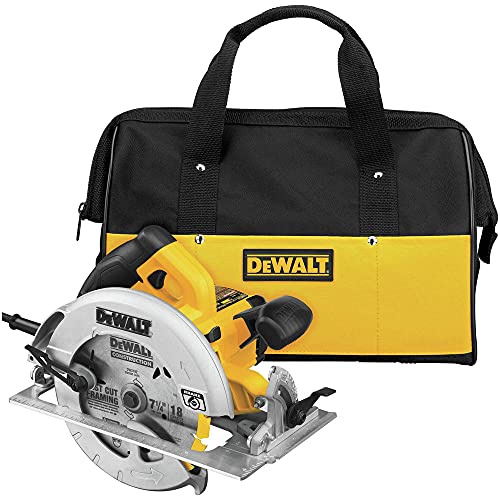
DEWALT Circular Saw
- 15
- Mid weight
- 0 to 57 degrees, pivoting
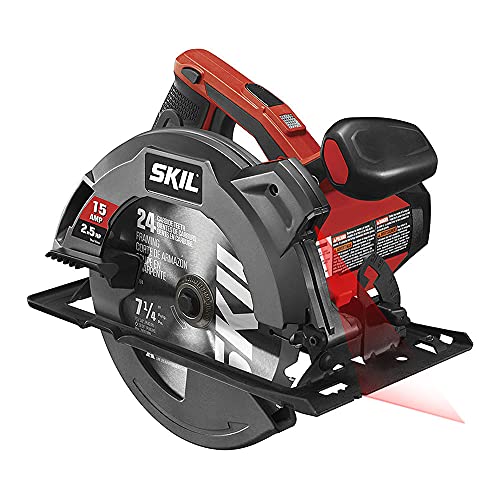
SKIL 15 Amp 7-1/4 Inch Circular Saw
- 15
- Light
- 0 to 51 degrees
The lineup compared
| Product | Amps | Weight | Bevel | Blade | Price band | Score |
|---|---|---|---|---|---|---|
| 1. DEWALT 7-1/4-Inch Circular Saw Best overall | 15 | About 8.8 lb | 0 to 57 degrees | 7-1/4 in, left | Around $115 to $140 | 9.0 |
| 2. DEWALT Circular Saw Best bevel capacity | 15 | Mid weight | 0 to 57 degrees, pivoting | 7-1/4 in | Around $115 to $140 | 8.6 |
| 3. SKIL 15 Amp 7-1/4 Inch Circular Saw Best budget with guide | 15 | Light | 0 to 51 degrees | 7-1/4 in, laser guide | Around $55 to $70 | 8.0 |
| 4. SKIL 14 Amp 7-1/4-Inch Circular Saw Best value | 14 | Light | 0 to 51 degrees | 7-1/4 in | Around $55 to $70 | 7.8 |
| 5. Skil 5080-01 13-Amp 7-1/4" Circular Saw Best budget | 13 | Light | 0 to 45 degrees | 7-1/4 in | Around $40 to $55 | 7.2 |
1. DEWALT 7-1/4-Inch Circular Saw, Best overall
- Amps
- 15
- Weight
- About 8.8 lb
- Bevel
- 0 to 57 degrees
- Blade
- 7-1/4 in, left
- Price band
- Around $115 to $140
Light for its class without giving up a rigid magnesium base, which is the combination that matters. A lighter saw is a saw you control better on a sheet, and control is what produces a straight cut when there is no guide involved.
Who should buy it
Anyone who uses a circular saw regularly, particularly overhead or on sheet goods where weight is felt through every cut.
What to watch out for
It is a bare tool proposition in the sense that the supplied blade is unremarkable; budget for a decent 40 tooth blade immediately. It also costs roughly three times the cheapest saw here.
What works
- Light without a flexy base
- Good sightline to the blade
- Adjustments hold under vibration
- Long standing reliability reputation
What does not
- Supplied blade is basic
- Three times the price of an entry saw
- No laser or LED
2. DEWALT Circular Saw, Best bevel capacity
- Amps
- 15
- Weight
- Mid weight
- Bevel
- 0 to 57 degrees, pivoting
- Blade
- 7-1/4 in
- Price band
- Around $115 to $140
Fifty seven degrees of bevel is more than most saws offer and more than most people need, right up until the job needs it. The pivoting foot design also makes depth changes quicker than a sliding shoe.
Who should buy it
Anyone cutting rafters, hips or compound angles where the standard 45 or 50 degree limit becomes the thing stopping you.
What to watch out for
The extra bevel capacity adds bulk. If you mostly cut square, you are carrying weight and paying for a feature you will rarely reach for.
What works
- 57 degree bevel is class leading
- Pivoting foot speeds depth changes
- Solid detents at common angles
- Well built adjustments
What does not
- Heavier than the DWE575
- Extra capacity rarely used by most people
- Same price as the lighter saw
3. SKIL 15 Amp 7-1/4 Inch Circular Saw, Best budget with guide
- Amps
- 15
- Weight
- Light
- Bevel
- 0 to 51 degrees
- Blade
- 7-1/4 in, laser guide
- Price band
- Around $55 to $70
A single beam laser projects the cut line ahead of the blade, which genuinely helps on rough freehand cuts in framing lumber. Fifteen amps at this price is the other reason this saw keeps selling.
Who should buy it
DIY and occasional use, and anyone doing rough carpentry where a visible line matters more than a perfect edge.
What to watch out for
Lasers are far less useful than they sound for accurate work. In daylight the beam washes out, and for anything precise you should be using a guide rather than following a projected line. Treat it as a convenience, not a substitute for a straight edge.
What works
- 15 amps at a budget price
- Laser helps on rough freehand cuts
- Light and easy to handle
- Widely available and supported
What does not
- Laser washes out in daylight
- Base plate less rigid than the DEWALT
- Adjustments feel cheaper
4. SKIL 14 Amp 7-1/4-Inch Circular Saw, Best value

- Amps
- 14
- Weight
- Light
- Bevel
- 0 to 51 degrees
- Blade
- 7-1/4 in
- Price band
- Around $55 to $70
The same saw as the laser model without the laser, for the same money and one less thing to fail. For anyone who intends to use a guide rail or a straight edge, which is anyone cutting sheet goods properly, that is the better trade.
Who should buy it
General purpose use where the saw will be paired with a straight edge for anything that matters and used freehand for anything that does not.
What to watch out for
Fourteen amps rather than fifteen, which you will notice in wet treated lumber and nowhere else. Base plate is stamped steel and will flex if you lean on it.
What works
- Simple, with less to go wrong
- Good power for the price
- Light enough for overhead work
- Cheap enough to treat as a site tool
What does not
- Stamped base flexes
- No electric brake
- Basic supplied blade
5. Skil 5080-01 13-Amp 7-1/4" Circular Saw, Best budget

- Amps
- 13
- Weight
- Light
- Bevel
- 0 to 45 degrees
- Blade
- 7-1/4 in
- Price band
- Around $40 to $55
Thirteen amps and a 45 degree bevel limit put this at the bottom of the class on paper, and in practice it cuts framing lumber perfectly well. This is the saw to buy if you need one for a project rather than for a working life.
Who should buy it
Occasional use, a first saw, or a second saw to keep in a vehicle. If a circular saw comes out twice a year, this is enough saw.
What to watch out for
Forty five degrees of bevel is the limit, so no compound roof work. The base is thin and the adjustments are basic, and it will feel it next to any of the saws above.
What works
- Cheapest genuine 7-1/4 in saw here
- Adequate power for framing lumber
- Light
- Blades are cheap and everywhere
What does not
- Only 13 amps
- 45 degree bevel limit
- Thin base plate that flexes
How to choose a circular saw
The base plate decides your accuracy
A circular saw is a blade and a reference surface, exactly like a router. A thin stamped base that flexes when you lean on it will let the blade wander even when you are following a straight edge. Cast magnesium or thick aluminum bases stay flat. This is the single biggest difference between a cheap saw and a good one, and it is never the headline specification.
Sightline matters more than a laser
Being able to see where the blade meets the line is what produces a straight freehand cut. Blade left saws give a right handed user a clear view of the cut. Blade right saws put the motor in the way. Neither is wrong, but check which you are buying, because it changes how the saw feels completely.
Amps are close to irrelevant in this class
Every 7-1/4 inch saw on the market has enough power to cut framing lumber and plywood. The difference between 13 and 15 amps shows up in wet treated timber and nowhere else. Do not pay for amps at the expense of a better base plate.
Adjustments that hold
Depth and bevel levers should lock positively and stay locked. Test by setting a bevel, locking it, and trying to move the shoe by hand. Any give will become a creeping bevel under vibration, which is the most frustrating fault a saw can have because you do not notice until the cut is wrong.
The blade is half the tool
Every saw here ships with a mediocre blade. Fitting a good 40 tooth carbide blade transforms any of them, and costs less than the difference between two models. See our carbide blade guide.
- Buy the base plate, not the motor.
- Check blade side against your dominant hand.
- Replace the supplied blade immediately.
- Use a straight edge or track for anything that has to be accurate. Freehand is for rough work.
- Set depth so the blade projects about a quarter inch below the stock, no more.
For a guide to cut against, see rip fences and cutting guides, and if you are weighing a circular saw against a table saw, that comparison is here.
Frequently asked questions
What size circular saw should I buy?
Seven and a quarter inches. It cuts a two by four at any bevel, blades are the cheapest and most available of any size, and it is the size every guide and accessory assumes. Smaller saws are lighter but cannot bevel through a two by.
Corded or cordless?
Corded if the saw lives in a shop and cuts all day. Cordless if you work in different places or on a site without power. Modern brushless cordless saws cut as well as corded, the tradeoff is battery cost. See our cordless roundup.
Is a laser guide worth it?
For rough freehand work, mildly. It washes out in daylight and it does not make a saw more accurate. Any cut that matters should be made against a straight edge, at which point the laser is irrelevant.
How deep should the blade be set?
About a quarter of an inch below the underside of the stock. Deeper exposes more blade for no benefit and increases kickback severity. Shallower makes the blade work harder and burn.
Why does my circular saw wander off the line?
Usually one of three things: a flexing base plate, a dull blade, or trying to steer a saw freehand that should be running against a guide. In that order of likelihood.
The bottom line
The DEWALT DWE575 is the saw to buy if you use one often. Light, rigid, good sightline, and adjustments that hold, which is the whole list of things that actually matter.
If you cut compound angles, the pivoting foot model gets you 57 degrees of bevel for the same money. And if a circular saw comes out a few times a year, the cheapest SKIL cuts framing lumber perfectly well and the money saved buys a better blade, which will improve your cuts more than a better saw would.
Leave a Reply