
The single thing that separates a metal cutting band saw from a woodworking one is blade speed. A wood saw runs somewhere around 2,000 to 3,000 feet per minute. Steel wants roughly 100 to 300. Run a blade at wood speed through steel and it will be finished in minutes, sometimes seconds.
That is why fitting a bi metal blade to a woodworking band saw does not make it a metal saw. The blade is only half the equation and the wrong half to solve first.
These five are ranked for a home or light fabrication shop. Four are proper metal saws, and one is a wood saw included specifically because it is the honest answer for people who cut mostly wood and occasionally aluminum.
Top picks at a glance
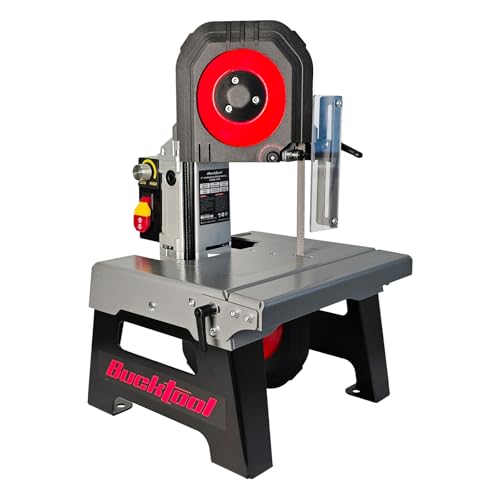
BUCKTOOL 5-Inch Metal Band Saw
- 5 in
- 1.5 HP, 10 amp
- Variable

KFMK Tabletop Band Saw
- 5 in
- 10 amp
- 137 to 472 FPM
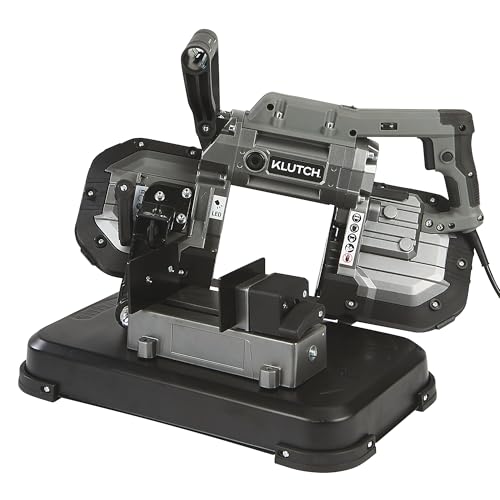
Klutch Portable Benchtop Band Saw
- Portable band saw class
- 120V
- Metal rated
The lineup compared
| Product | Capacity | Motor | Speed | Table | Price band | Score |
|---|---|---|---|---|---|---|
| 1. BUCKTOOL 5-Inch Metal Band Saw Best overall | 5 in | 1.5 HP, 10 amp | Variable | 13-3/8 x 9-5/8 in, extendable | Around $290 to $340 | 9.0 |
| 2. KFMK Tabletop Band Saw Best value | 5 in | 10 amp | 137 to 472 FPM | Dual workbench design | Around $280 to $320 | 8.5 |
| 3. Klutch Portable Benchtop Band Saw Best portable | Portable band saw class | 120V | Metal rated | Benchtop base included | Around $200 to $240 | 8.0 |
| 4. VEVOR Portable Band Saw 110V Removable Alloy Steel Best budget | 5 in with base, 4.7 in without | 1100W, 10 amp | Metal rated | Removable alloy base | Around $160 to $200 | 7.6 |
| 5. WEN 9-Inch Band Saw Best if metal is occasional | 3-1/2 in deep, 9 in wide | 2.8 amp | 2500 FPM, wood rated | Benchtop | Around $130 to $160 | 7.0 |
1. BUCKTOOL 5-Inch Metal Band Saw, Best overall
- Capacity
- 5 in
- Motor
- 1.5 HP, 10 amp
- Speed
- Variable
- Table
- 13-3/8 x 9-5/8 in, extendable
- Price band
- Around $290 to $340
Variable speed plus a genuine 1.5 horsepower is the combination that makes a benchtop metal saw useful rather than frustrating. You can slow it right down for stainless and tool steel, then bring it up for aluminum, and the extendable table means long stock is supported rather than balanced.
Who should buy it
Anyone doing regular metal work: fabrication, repairs, stock preparation. If you cut steel more than occasionally, the variable speed will pay for itself in blades alone.
What to watch out for
Five inches of capacity covers most stock but not large sections. It is also a benchtop machine, so it needs a solid bench under it and it will walk if you do not bolt it down.
What works
- Genuine variable speed across a usable range
- 1.5 HP is real power for the size
- Extendable table supports long stock
- 5 in capacity covers most shop stock
What does not
- Needs bolting to a solid bench
- 5 in limits large sections
- Heavier than it looks to reposition
2. KFMK Tabletop Band Saw, Best value
- Capacity
- 5 in
- Motor
- 10 amp
- Speed
- 137 to 472 FPM
- Table
- Dual workbench design
- Price band
- Around $280 to $320
The speed range is the number to look at: 137 feet per minute at the bottom is slow enough for stainless, and 472 at the top handles aluminum and brass without work hardening them. That is a properly specified metal cutting range rather than a wood saw with a low gear.
Who should buy it
The sensible buy for a home shop that cuts steel regularly but does not need the last increment of power.
What to watch out for
Fit and finish is a step below the Bucktool, and the vise is basic. Budget an afternoon for setup and squaring, and expect to upgrade the vise if you cut a lot of angle.
What works
- 137 to 472 FPM is a genuine metal cutting range
- 5 in capacity
- Large work surface
- Priced below the class leader
What does not
- Basic vise
- Setup needed out of the box
- Fit and finish below the Bucktool
3. Klutch Portable Benchtop Band Saw, Best portable
- Capacity
- Portable band saw class
- Motor
- 120V
- Speed
- Metal rated
- Table
- Benchtop base included
- Price band
- Around $200 to $240
A portable band saw with a bench base is two tools. Off the base it goes to the work, which is what you want for cutting pipe and conduit in place. On the base it becomes a small bench saw for stock preparation.
Who should buy it
Anyone doing installation or maintenance work as well as shop work: plumbing, conduit, structural repairs. The ability to take the saw to the job is worth more than a slightly bigger capacity you use in one place.
What to watch out for
As a bench saw it is a compromise: the base is not as rigid as a purpose built machine and the capacity is smaller. It is a portable saw that can sit on a bench, not a bench saw that happens to be portable.
What works
- Genuinely portable, goes to the work
- Bench base included
- Good for pipe, conduit and square stock
- Cheaper than a dedicated bench machine
What does not
- Less rigid than a purpose built bench saw
- Smaller capacity
- Handheld cuts need a steady hand
4. VEVOR Portable Band Saw 110V Removable Alloy Steel, Best budget

- Capacity
- 5 in with base, 4.7 in without
- Motor
- 1100W, 10 amp
- Speed
- Metal rated
- Table
- Removable alloy base
- Price band
- Around $160 to $200
The cheapest route into metal cutting that is still a real metal saw rather than a wood saw with a slow setting. The removable base gives you the same two tools in one idea at a lower price, with correspondingly lower refinement.
Who should buy it
Occasional metal cutting, where the alternative is an angle grinder and a shower of sparks. Anything is an improvement on that, and this is a large improvement.
What to watch out for
Balance and vibration are noticeably worse than the dearer options, which matters more in handheld use than on the base. Blade tracking needs checking regularly.
What works
- Cheapest genuine metal cutting saw here
- Removable base for handheld or bench use
- 1100W motor is adequate for the capacity
- 5 in capacity on the base
What does not
- More vibration than the dearer saws
- Tracking drifts and needs checking
- Basic everything
5. WEN 9-Inch Band Saw, Best if metal is occasional

- Capacity
- 3-1/2 in deep, 9 in wide
- Motor
- 2.8 amp
- Speed
- 2500 FPM, wood rated
- Table
- Benchtop
- Price band
- Around $130 to $160
This is a woodworking band saw and we have included it deliberately. If you cut wood most of the time and aluminum occasionally, this plus a fine pitch bi metal blade will handle thin non ferrous stock, and it will do a job the metal saws above cannot: cut curves in timber.
Who should buy it
Shops where wood is the main material and metal is a rare job. Buying a dedicated metal saw for four cuts a year is the wrong purchase.
What to watch out for
Be clear about the limits. At 2,500 feet per minute this is far too fast for steel, and attempting steel will destroy blades immediately. Thin aluminum and brass only, with a fine pitch bi metal blade and a slow careful feed.
What works
- Cuts wood properly, which the metal saws cannot
- Handles thin non ferrous with the right blade
- Cheapest machine here
- Useful 9 in throat for timber
What does not
- Single speed and far too fast for steel
- Not a metal saw and should not be sold as one
- Small resaw capacity
How to choose a metal cutting band saw
Speed is the whole thing
Blade speed is what decides whether a metal saw works. Mild steel wants roughly 200 to 300 feet per minute. Stainless and tool steel want slower still, down toward 100. Aluminum and brass tolerate faster, up to about 500. A saw with a variable or multi step speed control covers all of it. A single speed wood saw covers none of it.
Match tooth pitch to wall thickness
The three teeth in the cut rule matters even more in metal, because a tooth that catches on a thin wall strips off. For thin wall tube you want 18 to 24 TPI. For solid bar an inch or more thick, 10 to 14. Getting this wrong strips teeth in a single cut.
Bi metal blades, not carbon steel
A bi metal blade welds hardened high speed steel teeth to a flexible backing. That is what survives metal. Carbon steel blades belong in wood and will not last a single cut in steel.
Cutting fluid extends blade life dramatically
Metal cutting generates heat at the tooth, and heat is what kills the edge. A flood coolant, a mist system or even a wax stick applied to the blade makes a measurable difference to how many cuts you get. This is covered in our cutting fluid guide.
A vise that holds square is not optional
Most of the cheap saws in this category have a vise that is the weakest part of the machine. If the stock can twist, the cut will not be square and the blade will bind. Check the vise before you check anything else.
- Buy variable speed if you cut more than one type of metal.
- Never run a metal blade on a woodworking saw’s speed setting.
- Deburr cuts. Metal band saw cuts leave a sharp burr that will find your hand.
- Bolt benchtop machines down. They walk under load.
- Wear eye protection. Metal chips travel further and faster than sawdust.
If your main material is timber, the honest answer is a woodworking saw. See best band saws for woodworking.
Frequently asked questions
Can I cut metal on a woodworking band saw?
Thin non ferrous metal such as aluminum and brass, with a fine pitch bi metal blade and a slow careful feed. Steel, no. Wood saw speeds are roughly ten times too fast and the blade will be ruined almost at once.
What blade do I need for cutting metal?
Bi metal, with tooth pitch matched to wall thickness. Eighteen to 24 TPI for thin tube, 10 to 14 for thick solid stock. Carbon steel blades are for wood only.
What speed should a band saw run for steel?
Roughly 200 to 300 feet per minute for mild steel, slower for stainless and tool steel. If your saw cannot go this slow, it is not a metal cutting saw regardless of what blade you fit.
Do I need cutting fluid?
It is not strictly required for occasional cuts, but it extends blade life substantially and improves the finish. For anything more than occasional metal work it pays for itself.
Portable or benchtop?
Portable if you cut in place, such as pipe and conduit on site. Benchtop if you cut stock in the shop. Several models do both with a removable base, and that compromise works well.
The bottom line
For a shop that cuts metal regularly, the Bucktool is the buy: variable speed across a genuinely useful range, real power, and a table that supports the work. The KFMK does much the same for slightly less if you can live with a basic vise.
If you cut metal in place as often as in the shop, the portable with a bench base is the more useful tool overall. And if you are honest that metal is a rare job in a wood shop, buy the woodworking saw and a bi metal blade for thin non ferrous, and do not pretend it is a metal saw.
Leave a Reply