Aluminum is soft, which makes people assume it is easy to cut. It is not, because soft metal grabs. A blade with positive rake teeth, which is every wood blade, digs into aluminum, climbs the cut, and either snatches the workpiece or throws it.
The correct geometry is a triple chip grind with a negative or neutral rake. The tooth scrapes rather than bites, which is exactly what you want in a material that would otherwise pull the blade in.
Get that right and aluminum cuts beautifully on a circular saw, cleanly enough to need almost no deburring.
Top picks at a glance

Diablo Saw Blade
- 56 TCG
- Negative
- 7-1/4 in
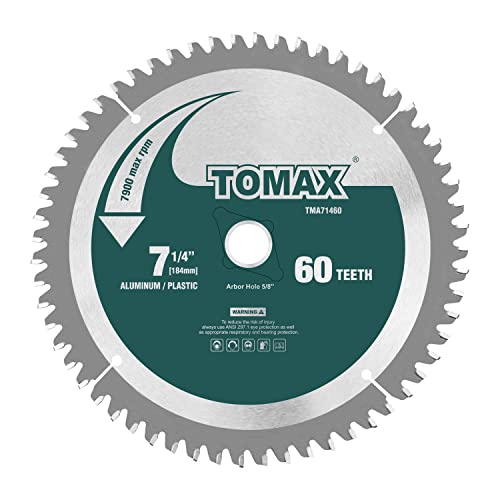
TOMAX 7-1/4-Inch 60 Tooth TCG Aluminum and
- 60 TCG
- Negative
- 7-1/4 in

EXFEIN 7-1/4 Inch 60 Teeth Aluminum and Non-Ferrous
- 60
- Non ferrous geometry
- 7-1/4 in
The lineup compared
| Product | Teeth | Rake | Diameter | Cuts | Price band | Score |
|---|---|---|---|---|---|---|
| 1. Diablo Saw Blade Best overall | 56 TCG | Negative | 7-1/4 in | Aluminum and non ferrous | Around $32 to $42 | 9.1 |
| 2. TOMAX 7-1/4-Inch 60 Tooth TCG Aluminum and Best for thin wall | 60 TCG | Negative | 7-1/4 in | Aluminum, non ferrous | Around $22 to $30 | 8.6 |
| 3. EXFEIN 7-1/4 Inch 60 Teeth Aluminum and Non-Ferrous Best value | 60 | Non ferrous geometry | 7-1/4 in | Aluminum, non ferrous | Around $18 to $25 | 8.2 |
| 4. FOXBC 7-1/4 inch Aluminum Cutting Saw Blade 56T Best budget | 56 | Non ferrous geometry | 7-1/4 in | Aluminum, non ferrous | Around $17 to $23 | 8.0 |
| 5. DEWALT Circular Saw Blade Best for sheet | 68 | Metal cutting | 7-1/4 in | Thin non ferrous | Around $8 to $13 | 7.8 |
1. Diablo Saw Blade, Best overall
- Teeth
- 56 TCG
- Rake
- Negative
- Diameter
- 7-1/4 in
- Cuts
- Aluminum and non ferrous
- Price band
- Around $32 to $42
Fifty six teeth in a triple chip grind with negative rake is the textbook aluminum specification, and this is the blade most fabricators reach for. It cuts extrusion and plate without grabbing and leaves an edge that barely needs a file.
Who should buy it
Anyone cutting aluminum extrusion, angle, plate or non ferrous stock with any regularity.
What to watch out for
Negative rake blades push the workpiece down and away, so the stock must be clamped firmly. Also do not use this on wood, where the negative rake will make it slow and hot.
What works
- Correct negative rake TCG geometry
- Clean edge needing minimal deburring
- Handles extrusion and plate
- Good carbide grade
What does not
- Must be clamped properly
- Useless in wood
- Premium price
2. TOMAX 7-1/4-Inch 60 Tooth TCG Aluminum and, Best for thin wall
- Teeth
- 60 TCG
- Rake
- Negative
- Diameter
- 7-1/4 in
- Cuts
- Aluminum, non ferrous
- Price band
- Around $22 to $30
Sixty teeth suits thin wall extrusion, where fewer teeth catch on the wall and pull. For window frame stock, T slot extrusion and thin angle this is the safer tooth count.
Who should buy it
Anyone working thin wall aluminum sections rather than solid bar.
What to watch out for
Higher tooth counts load up faster in thick solid stock. If you cut both, keep two blades rather than compromising with one.
What works
- 60 teeth for thin wall safety
- TCG negative rake geometry
- Reasonable price
- Clean cut with minimal burr
What does not
- Loads up in thick solid stock
- Not for wood
- Mid grade carbide
3. EXFEIN 7-1/4 Inch 60 Teeth Aluminum and Non-Ferrous, Best value
- Teeth
- 60
- Rake
- Non ferrous geometry
- Diameter
- 7-1/4 in
- Cuts
- Aluminum, non ferrous
- Price band
- Around $18 to $25
Correct non ferrous geometry at a budget price. The carbide is unremarkable and the finish is a step below the Diablo, but it will not grab, which is the thing that actually matters here.
Who should buy it
Occasional aluminum work where buying a premium blade for a handful of cuts is hard to justify.
What to watch out for
Inspect the tips before use. At this price grinding consistency varies, and a tooth that sits proud will chatter.
What works
- Correct geometry at a low price
- Safe on aluminum
- 60 teeth suits most extrusion
- Cheap enough for occasional use
What does not
- Variable tip grinding
- Rougher finish
- Short life
4. FOXBC 7-1/4 inch Aluminum Cutting Saw Blade 56T, Best budget

- Teeth
- 56
- Rake
- Non ferrous geometry
- Diameter
- 7-1/4 in
- Cuts
- Aluminum, non ferrous
- Price band
- Around $17 to $23
Fifty six teeth, non ferrous geometry, budget carbide. The middle option: cheaper than the Diablo, better specified than the cheapest blades, and entirely adequate for hobby fabrication.
Who should buy it
Someone building with extrusion, making brackets or cutting aluminum sheet occasionally.
What to watch out for
The same clamping discipline applies regardless of price. Non ferrous blades do not grab, but unclamped aluminum still moves.
What works
- 56 teeth suits general aluminum work
- Correct grind at a budget price
- Cuts brass and copper too
- Widely available
What does not
- Basic carbide
- Finish needs some deburring
- Not for wood
5. DEWALT Circular Saw Blade, Best for sheet

- Teeth
- 68
- Rake
- Metal cutting
- Diameter
- 7-1/4 in
- Cuts
- Thin non ferrous
- Price band
- Around $8 to $13
Sixty eight teeth is a sheet specification. On thin aluminum sheet and plate this leaves the cleanest edge of anything here, and it is remarkably cheap.
Who should buy it
Sheet work specifically. If you are cutting aluminum sheet or thin plate rather than section, this is the tooth count you want.
What to watch out for
Too many teeth for anything thick. In solid bar it will pack and overheat almost immediately. Sheet and thin plate only.
What works
- Cleanest edge on sheet
- Very cheap
- High tooth count is safe on thin material
- Widely stocked
What does not
- Unusable on thick stock
- Basic carbide
- Narrow use case
How to cut aluminum safely
Negative rake is the safety feature
A positive rake tooth, which is what every wood blade has, pulls itself into the material. In soft aluminum that becomes a climbing cut: the blade grabs, the workpiece lifts, and it can be thrown. A negative rake tooth scrapes instead of biting. This single geometry difference is why you cannot simply fit a fine wood blade and cut aluminum.
Triple chip grind explained
TCG alternates a flat raking tooth with a chamfered one. The chamfered tooth takes the center of the cut and the flat one cleans the corners. It produces less heat and a better edge in metal than the alternating bevel used for wood.
Clamp everything, without exception
Aluminum offcuts are light and blades are fast. An unclamped piece will move, and when it does it either binds or becomes a projectile. Clamp both sides of the cut where you can.
Lubricate the cut
A wax stick or cutting lubricant applied to the blade reduces aluminum welding itself to the teeth, which is the main way these blades fail. Gummed teeth stop cutting and start rubbing.
Speed and feed
Aluminum tolerates higher blade speed than steel, so most wood saws are within rating. Feed steadily rather than slowly, because dwelling in one spot melts aluminum onto the teeth.
- Never use a wood blade on aluminum.
- Sixty plus teeth for sheet and thin wall, 56 for general section.
- Clamp the work on both sides of the cut.
- Lubricate the blade to stop material welding to the teeth.
- Eye protection. Aluminum chips are small, fast and sharp.
For ferrous metal, the geometry and materials are different again. See metal cutting blades.
Frequently asked questions
Can I cut aluminum with a wood blade?
You should not. A positive rake wood blade grabs in aluminum and can throw the workpiece. Use a blade with negative rake TCG geometry made for non ferrous metal.
How many teeth for cutting aluminum?
Fifty six to 60 for general extrusion and section. Sixty eight or more for sheet and thin plate. As with all metal, at least three teeth in the cut at any time.
Do I need lubricant?
It helps considerably. Aluminum welds to carbide teeth when they get hot, and a gummed blade stops cutting. A wax stick touched to the blade is enough.
Can these blades cut brass and copper?
Yes. Non ferrous geometry suits all of them. Brass in particular cuts very cleanly with a TCG negative rake blade.
Why is my aluminum cut rough and torn?
Usually the wrong blade, or too slow a feed causing the material to melt and smear rather than chip. Check geometry first, then feed rate, then lubrication.
The bottom line
For anything but sheet, the Diablo 56 tooth TCG is the blade: correct negative rake, good carbide, and an edge that comes off needing almost nothing done to it.
If your aluminum work is sheet and thin plate, jump to a 68 tooth blade instead. And whatever you buy, do not talk yourself into using a fine wood blade because it has plenty of teeth. Tooth count is not the safety feature here, rake angle is.
Leave a Reply