
For decades cutting steel with a circular saw meant an abrasive disc, a shower of sparks, a burned edge and a wheel that shrank as it worked. Cermet and carbide tipped metal blades changed that. They cut cold, leave an edge you can touch, and last hundreds of cuts instead of a handful.
The catch is speed. A wood saw runs somewhere around 5,800 rpm at the blade. Most metal cutting blades are rated well below that, and running one faster than its rating is genuinely dangerous.
So this is a two part decision: the right blade, and a saw that can turn slowly enough to use it.
Top picks at a glance

Diablo Steel Demon Cermet II Saw Blade
- 48 TCG
- Cermet
- 7-1/4 in

Diablo 7-1/4-Inch x 70-Teeth Steel Demon Carbide
- 70
- Carbide
- 7-1/4 in

FOXBC 7-1/4 inch Circular Saw Blade Metal and
- 48
- Cermet
- 7-1/4 in
The lineup compared
| Product | Teeth | Material | Diameter | Cuts | Price band | Score |
|---|---|---|---|---|---|---|
| 1. Diablo Steel Demon Cermet II Saw Blade Best overall | 48 TCG | Cermet | 7-1/4 in | Mild and stainless steel | Around $32 to $42 | 9.2 |
| 2. Diablo 7-1/4-Inch x 70-Teeth Steel Demon Carbide Best for thin metal | 70 | Carbide | 7-1/4 in | Thin steel and sheet | Around $35 to $45 | 8.7 |
| 3. FOXBC 7-1/4 inch Circular Saw Blade Metal and Best value | 48 | Cermet | 7-1/4 in | Steel and stainless | Around $22 to $30 | 8.3 |
| 4. FOXBC 7-1/4 inch Circular Saw Blade Metal and Best for clean edges | 70 | Carbide | 7-1/4 in | Thin steel, stainless | Around $18 to $25 | 8.1 |
| 5. DEWALT Circular Saw Blade Best budget | 16 | Carbide | 7-1/4 in | Ferrous metal, rough | Around $8 to $13 | 7.2 |
1. Diablo Steel Demon Cermet II Saw Blade, Best overall
- Teeth
- 48 TCG
- Material
- Cermet
- Diameter
- 7-1/4 in
- Cuts
- Mild and stainless steel
- Price band
- Around $32 to $42
Cermet is a ceramic and metal composite that holds an edge at temperatures that would destroy ordinary carbide. In practice that means many times the blade life in steel, and a cut that stays cool enough not to discolor the workpiece.
Who should buy it
Anyone cutting steel more than occasionally: fabrication, structural work, unistrut, angle and box section. The blade life difference over carbide pays for itself quickly.
What to watch out for
Check your saw’s rpm against the blade’s maximum rating before fitting. Cermet is also harder and therefore more brittle, so it does not tolerate the blade binding in the cut.
What works
- Cermet teeth survive heat that kills carbide
- Cuts stainless as well as mild steel
- Cold cut, so no discolored edge
- Long life makes cost per cut low
What does not
- Needs a saw within the rpm rating
- Brittle if the cut binds
- Most expensive blade here
2. Diablo 7-1/4-Inch x 70-Teeth Steel Demon Carbide, Best for thin metal
- Teeth
- 70
- Material
- Carbide
- Diameter
- 7-1/4 in
- Cuts
- Thin steel and sheet
- Price band
- Around $35 to $45
Seventy teeth is the specification for thin wall material, where a coarse blade catches on the wall and strips teeth. On sheet, thin tube and light gauge stud this is the blade that produces a clean cut rather than a mangled edge.
Who should buy it
Anyone working sheet metal, light gauge steel framing, thin wall conduit or tube.
What to watch out for
Seventy teeth in thick solid bar packs and overheats. This is a thin material blade and using it on heavy section is the fastest way to ruin it.
What works
- 70 teeth suits thin wall and sheet
- Clean edge with minimal burr
- Cold cutting
- Good carbide grade
What does not
- Wrong blade for thick section
- Premium price
- More teeth means slower in any material
3. FOXBC 7-1/4 inch Circular Saw Blade Metal and, Best value
- Teeth
- 48
- Material
- Cermet
- Diameter
- 7-1/4 in
- Cuts
- Steel and stainless
- Price band
- Around $22 to $30
The same 48 tooth cermet specification as the Diablo at roughly two thirds the price. Edge life reports are a step below but the geometry and tooth material are the same, which is what decides whether the blade works at all.
Who should buy it
Occasional to regular metal cutting where the absolute longest life is less important than not overpaying.
What to watch out for
Quality control is less consistent than the branded blade. Inspect the tips before first use and after any bind.
What works
- Cermet teeth at a mid range price
- 48 teeth suits general steel work
- Cuts stainless
- Widely available
What does not
- Shorter life than the Diablo
- Variable quality control
- Same rpm caveat applies
4. FOXBC 7-1/4 inch Circular Saw Blade Metal and, Best for clean edges

- Teeth
- 70
- Material
- Carbide
- Diameter
- 7-1/4 in
- Cuts
- Thin steel, stainless
- Price band
- Around $18 to $25
A budget alternative to the Diablo thin metal blade with the same 70 tooth count. If your work is sheet and thin tube and you want a clean edge without the premium, this is the sensible middle.
Who should buy it
Sheet metal work at hobby or light trade volume, where a clean edge matters and blade life is a secondary concern.
What to watch out for
Same thin material restriction. Also confirm the arbor, because metal blades sometimes ship with a different bore than wood blades.
What works
- 70 tooth clean cut at a lower price
- Handles stainless
- Good for sheet and thin wall
- Minimal burr
What does not
- Thin material only
- Shorter life than premium
- Basic carbide grade
5. DEWALT Circular Saw Blade, Best budget
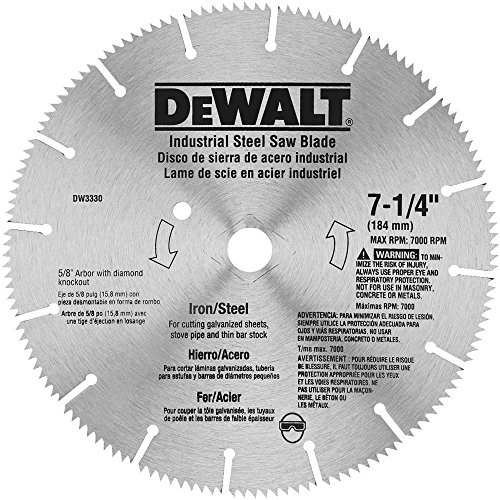
- Teeth
- 16
- Material
- Carbide
- Diameter
- 7-1/4 in
- Cuts
- Ferrous metal, rough
- Price band
- Around $8 to $13
Sixteen teeth is a rough cutting specification and this blade makes no pretence otherwise. It exists to get through metal cheaply where the cut face does not matter.
Who should buy it
Demolition, rough site cutting, anything where speed matters and the edge will be ground or welded afterwards.
What to watch out for
Sixteen teeth on thin wall stock will catch and strip teeth, and possibly snatch the workpiece. Use it on solid section only. The finish is rough and the burr is significant.
What works
- Cheapest metal cutting option here
- Fast through solid section
- Widely stocked
- Cheap enough to treat as disposable
What does not
- Dangerous on thin wall material
- Rough finish with a heavy burr
- Short life
How to cut metal with a circular saw
Check the rpm rating first, every time
This is a safety matter, not a performance one. Metal cutting blades carry a maximum rpm and a standard wood circular saw at around 5,800 rpm exceeds many of them. Running a blade above its rating risks it coming apart. Read the blade, read the saw, and if the saw is faster, do not fit the blade.
Tooth count against wall thickness
The three teeth in the cut rule governs metal even more strictly than wood, because a tooth that catches on a thin wall strips off. Sixty to 70 teeth for sheet and thin wall tube. Forty to 48 for general steel section. Coarse 16 tooth blades for solid stock only.
Cermet against carbide
Carbide works and is cheaper. Cermet, a ceramic metal composite, keeps its hardness at higher temperatures, which is exactly the failure mode in steel cutting. If you cut steel regularly, cermet costs more upfront and less per cut.
Clamp the work, always
Metal that moves during a cut will bind the blade, and a bound metal blade either stalls the saw or throws the workpiece. Clamp it properly to a solid surface. This is not the material to hold with your other hand.
Cold cutting still means hot chips
The cut face stays cool. The chips do not. They come off hot, they are sharp, and they travel. Eye protection and long sleeves, and do not cut over anything you mind burning.
- Match the blade rpm rating to your saw before anything else.
- Sixty plus teeth for thin wall, 40 to 48 for section, 16 for rough solid stock only.
- Clamp the work. Every time.
- Let the blade cut at its own rate. Forcing it is what causes binding.
- Deburr the cut. Metal band and circular cuts leave an edge that will find you.
For a saw designed to run these blades, see best metal cutting circular saws. For aluminum specifically, which needs different geometry, see blades for aluminum.
Frequently asked questions
Can I put a metal cutting blade on a normal circular saw?
Only if your saw’s rpm is at or below the blade’s maximum rating. Many wood saws spin faster than metal blades are rated for. Check both numbers before fitting anything.
Is a metal blade better than an abrasive disc?
For almost everything, yes. It cuts cold so the edge is not burned, it lasts hundreds of cuts rather than a few, and it does not shrink as it wears. Abrasive discs still have a place in awkward angles and thin sheet on site.
What blade cuts stainless steel?
A cermet tipped blade with a tooth count suited to the section thickness. Stainless work hardens if you feed too slowly, so steady firm feed and adequate teeth in the cut.
Why did my metal blade lose teeth?
Almost always too few teeth in the cut for the wall thickness, or the workpiece moved and bound the blade. Both are avoidable and neither is a fault in the blade.
Do I need cutting fluid?
Not for a cold cut blade in a circular saw, which is designed to run dry. Fluid belongs on band saws and machining. See our cutting fluid guide.
The bottom line
The Diablo cermet 48 tooth is the blade to buy for general steel work: it survives the heat, it cuts stainless, and the life difference over ordinary carbide makes it cheaper per cut despite the price.
For sheet and thin wall, go to 70 teeth. And whatever you buy, check the rpm rating against your saw before it goes anywhere near the arbor.
Leave a Reply