Plywood tears out because the blade lifts the thin face veneer before it cuts it. That is a geometry problem, and no amount of careful feeding fully solves it with a 24 tooth framing blade fitted.
The fix is a high tooth count blade with an alternate top bevel grind, which slices the veneer fibres rather than chiselling through them. Sixty teeth is the practical sweet spot for a 7-1/4 inch saw.
The second half of the fix is free and most people skip it, which we cover in the guide below.
Top picks at a glance
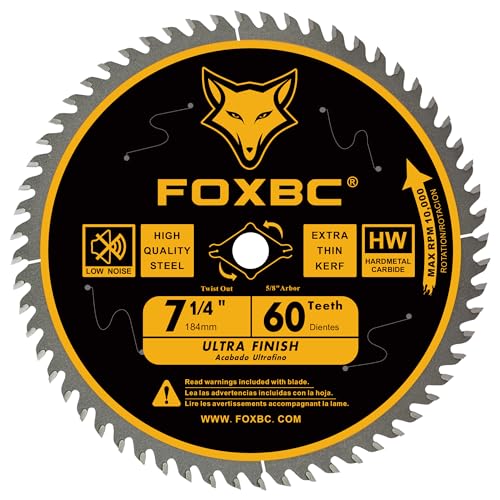
FOXBC 7-1/4" Circular Saw Blade Ultra Fine Finish
- 60
- 7-1/4 in
- Ultra fine finish

Echo Corner 7-1/4 Inch Circular Saw Blade
- 60
- 7-1/4 in
- Fine finish

FOXBC 6-1/2 inch Circular Saw Blade
- 60
- 6-1/2 in
- Ultra fine finish
The lineup compared
| Product | Teeth | Diameter | Grind | Arbor | Supplied | Best for | Price band | Score |
|---|---|---|---|---|---|---|---|---|
| 1. FOXBC 7-1/4" Circular Saw Blade Ultra Fine Finish Best overall | 60 | 7-1/4 in | Ultra fine finish | 5/8 in | n/a | n/a | Around $13 to $18 | 9.0 |
| 2. Echo Corner 7-1/4 Inch Circular Saw Blade Best budget | 60 | 7-1/4 in | Fine finish | 5/8 in | n/a | n/a | Around $8 to $13 | 8.1 |
| 3. FOXBC 6-1/2 inch Circular Saw Blade Best for volume work | 60 | 6-1/2 in | Ultra fine finish | n/a | 2 pack | n/a | Around $25 to $32 | 8.3 |
| 4. CRALY 6-1/2 Inch 60 Teeth Ultra Fine Finish Wood Best for 6-1/2 inch saws | 60 | 6-1/2 in | Ultra fine finish | 5/8 in | n/a | n/a | Around $20 to $28 | 7.9 |
| 5. FOXBC 6-1/2 inch Circular Saw Blade Ultra Fine Best fine finish general | 60 | 6-1/2 in | Ultra fine finish | n/a | n/a | Wood and ply | Around $14 to $20 | 8.0 |
1. FOXBC 7-1/4" Circular Saw Blade Ultra Fine Finish, Best overall
- Teeth
- 60
- Diameter
- 7-1/4 in
- Grind
- Ultra fine finish
- Arbor
- 5/8 in
- Price band
- Around $13 to $18
Sixty teeth on a 7-1/4 inch plate is the correct specification for sheet goods, and this is the cheapest blade here that delivers it properly. The face it leaves on birch ply needs no cleanup on the good side.
Who should buy it
Anyone cutting cabinet grade plywood, melamine or veneered sheet. If you build carcases, this blade lives on the saw.
What to watch out for
Sixty teeth rips slowly and will burn if you push it through solid hardwood. This is a sheet goods blade, not a general purpose one. Keep a 40 tooth blade for everything else.
What works
- 60 teeth at a budget price
- Clean face on veneered ply and melamine
- Standard 5/8 in arbor
- Thin kerf reduces load
What does not
- Slow and hot in solid wood rips
- Thin plate can deflect if forced
- Not a general purpose blade
2. Echo Corner 7-1/4 Inch Circular Saw Blade, Best budget
- Teeth
- 60
- Diameter
- 7-1/4 in
- Grind
- Fine finish
- Arbor
- 5/8 in
- Price band
- Around $8 to $13
The cheapest 60 tooth blade that is honestly specified. Carbide grade is basic, so edge life is short, but the geometry is right and geometry is what stops tearout.
Who should buy it
Someone doing a single plywood project who does not want to spend more on the blade than the offcuts are worth.
What to watch out for
Expect it to dull noticeably after a few sheets, and expect tearout to return as it does. That is the trade at this price.
What works
- Cheapest correct geometry here
- Fine for a project rather than a career
- Standard arbor
- No reluctance to replace it
What does not
- Short edge life
- Tearout returns as it dulls
- Basic carbide
3. FOXBC 6-1/2 inch Circular Saw Blade, Best for volume work
- Teeth
- 60
- Diameter
- 6-1/2 in
- Grind
- Ultra fine finish
- Supplied
- 2 pack
- Price band
- Around $25 to $32
Two blades, which matters on sheet goods more than elsewhere: a dulling blade shows up immediately as tearout on the face veneer, and having the spare is what stops you finishing the sheet with a blade you know is past it.
Who should buy it
Anyone breaking down several sheets in a session, particularly on a cordless 6-1/2 inch saw where this size fits.
What to watch out for
This is the 6-1/2 inch size, common on cordless saws. Check your saw before ordering, because 6-1/2 and 7-1/4 are not interchangeable.
What works
- Two blades so you always have a sharp one
- Ultra fine finish geometry
- Right size for most cordless saws
- Good cost per blade
What does not
- 6-1/2 in only
- Will not fit a standard corded 7-1/4 in saw
- Slow in solid timber
4. CRALY 6-1/2 Inch 60 Teeth Ultra Fine Finish Wood, Best for 6-1/2 inch saws

- Teeth
- 60
- Diameter
- 6-1/2 in
- Grind
- Ultra fine finish
- Arbor
- 5/8 in
- Price band
- Around $20 to $28
A single 6-1/2 inch 60 tooth blade for cordless saws. The smaller diameter suits sheet goods well, because you rarely need the depth and the reduced blade mass means more cuts per battery charge.
Who should buy it
Cordless saw owners breaking down sheets on site or in the driveway, where the saw is a 6-1/2 inch and the work is all plywood.
What to watch out for
Confirm the arbor. Some cordless saws use a smaller arbor than the standard 5/8 inch, and fitting the wrong one is not a thing you can bodge safely.
What works
- Correct geometry for cordless sheet work
- Lower blade mass extends runtime
- Clean face on veneered ply
- Cheap enough to keep spares
What does not
- 6-1/2 in only
- Arbor size varies on cordless saws
- Single blade
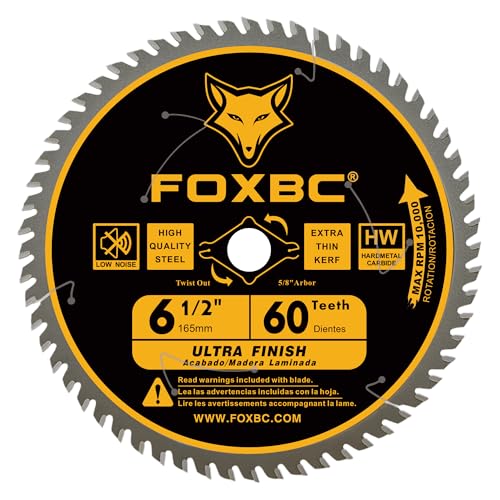
5. FOXBC 6-1/2 inch Circular Saw Blade Ultra Fine, Best fine finish general
- Teeth
- 60
- Diameter
- 6-1/2 in
- Grind
- Ultra fine finish
- Best for
- Wood and ply
- Price band
- Around $14 to $20
Specified for wood generally rather than sheet goods specifically, which in practice means it handles hardwood crosscuts as well as plywood without the burning a pure sheet blade gives you.
Who should buy it
Someone who wants one fine finish blade on a cordless saw and does not want to swap between sheet goods and solid timber.
What to watch out for
A compromise blade compromises. It is not quite as clean on melamine as the dedicated sheet blades and it still rips slowly.
What works
- Handles ply and solid timber
- Good crosscut finish
- Fewer blade changes
- Reasonable price
What does not
- Not the cleanest on melamine
- Still slow in rips
- 6-1/2 in only
How to cut plywood without tearout
Tooth count and grind
Sixty teeth in an alternate top bevel grind is the specification. The alternating bevel slices the face veneer fibres from both sides rather than pushing through them, which is precisely the action that prevents tearout. A 40 tooth combination blade will do an acceptable job on the good face and a poor one on the underside.
Cut with the good face up or down, depending on the saw
A circular saw blade cuts upward through the stock, so tearout happens on the top face. Put the good side down when using a circular saw. On a table saw the blade cuts downward at the front, so good side up. Getting this backwards is the most common cause of ruined sheets.
The scoring cut, which costs nothing
Set the blade to about a sixteenth of an inch deep and run the full cut as a scoring pass first, then reset to full depth and cut again along the same line. The first pass severs the veneer fibres so the second cannot lift them. This works with any blade and it is the single most effective trick in sheet goods work.
Tape the cut line
Blue painter’s tape over the line, cut through it, then peel. The tape holds the fibres down. Less effective than a scoring cut but faster, and the two combined handle even brittle melamine.
Support the sheet properly
A sheet sagging between two sawhorses will pinch the blade halfway through the cut, which causes binding, burning and kickback. Rigid foam insulation on the floor is the cheapest good answer: full support, and you cut into the foam without caring.
- Sixty teeth for sheet goods, forty for everything else.
- Good face down with a circular saw.
- Score first at 1/16 in depth, then cut full depth.
- Support the whole sheet, not just the ends.
- Set blade depth to about 1/4 in below the sheet, no more.
A straight edge or track transforms sheet cutting. See rip fences and cutting guides, and for general blades see best carbide blades.
Frequently asked questions
How many teeth for cutting plywood?
Sixty on a 7-1/4 inch blade. More teeth means smaller bites and less lifting of the face veneer. Eighty tooth blades exist and cut slightly cleaner at the cost of speed and heat.
Why does my plywood tear out on the bottom?
A circular saw cuts upward, so tearout appears on the upper face. If you are getting it underneath you are probably thinking of a table saw. Flip the sheet so the good face is down.
Does a scoring cut really work?
Yes, and it is the most reliable method there is. Two passes take twice as long and produce a cut with no tearout on either face, even with a mediocre blade.
Can I use a plywood blade for solid wood?
For crosscutting, yes, and it leaves a clean shoulder. For ripping, it will be slow and it will burn, because 60 teeth cannot clear the waste a rip produces.
What about melamine?
Melamine is the hardest case: brittle surface, chips easily. Use a 60 or 80 tooth blade, score first, tape the line, and support the sheet fully. All four together, not one of them.
The bottom line
Fit a 60 tooth fine finish blade and cut with the good face down, and most plywood tearout disappears. The FOXBC 7-1/4 inch does that for under twenty dollars, which makes it the obvious buy for a corded saw.
Then learn the scoring cut. It costs nothing, adds thirty seconds a cut, and produces a cleaner edge than any blade upgrade will.
Leave a Reply