Cordless saws have got good enough that the corded question deserves an answer rather than an assumption. Here is the honest one: for a saw that lives in a shop and cuts all day, corded is still the better buy, and it is not close on price.
A 15 amp corded saw delivers sustained power indefinitely, weighs less than the same saw with a battery hanging off it, and costs a third of the cordless equivalent once you count packs.
What you give up is the cord, which matters enormously on a site and barely at all at a bench.
Top picks at a glance

DEWALT 7-1/4-Inch Circular Saw
- 15
- About 8.8 lb
- 0 to 57 degrees
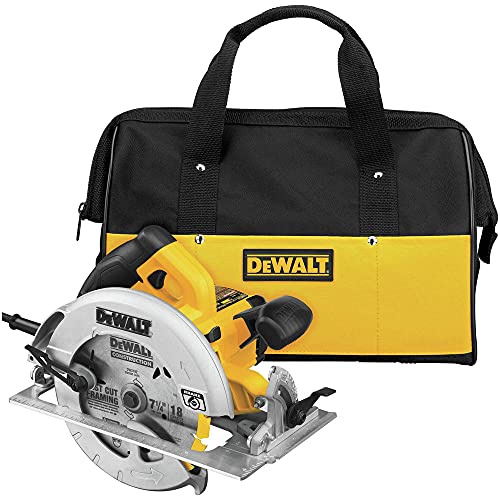
DEWALT Circular Saw
- 15
- Mid
- 0 to 57 degrees, pivoting

SKIL 14 Amp 7-1/4-Inch Circular Saw
- 14
- Light
- 0 to 51 degrees
The lineup compared
| Product | Amps | Weight | Bevel | Blade | Price band | Score |
|---|---|---|---|---|---|---|
| 1. DEWALT 7-1/4-Inch Circular Saw Best overall | 15 | About 8.8 lb | 0 to 57 degrees | 7-1/4 in | Around $115 to $140 | 9.0 |
| 2. DEWALT Circular Saw Best for compound angles | 15 | Mid | 0 to 57 degrees, pivoting | 7-1/4 in | Around $115 to $140 | 8.6 |
| 3. SKIL 14 Amp 7-1/4-Inch Circular Saw Best value | 14 | Light | 0 to 51 degrees | 7-1/4 in | Around $55 to $70 | 8.0 |
| 4. SKIL 15 Amp 7-1/4 Inch Circular Saw Best budget with guide | 15 | Light | 0 to 51 degrees | 7-1/4 in, laser | Around $55 to $70 | 7.9 |
| 5. Skil 5080-01 13-Amp 7-1/4" Circular Saw Best budget | 13 | Light | 0 to 45 degrees | 7-1/4 in | Around $40 to $55 | 7.2 |
1. DEWALT 7-1/4-Inch Circular Saw, Best overall
- Amps
- 15
- Weight
- About 8.8 lb
- Bevel
- 0 to 57 degrees
- Blade
- 7-1/4 in
- Price band
- Around $115 to $140
Light for a 15 amp saw with a base that stays flat, which is the combination that produces straight cuts without wearing you out. The adjustments lock positively and stay put, which is the fault that ruins cheaper saws.
Who should buy it
Anyone who uses a circular saw regularly. This is the default recommendation for a shop saw and it has been for years.
What to watch out for
The supplied blade is basic. Budget for a decent 40 tooth carbide blade, which will improve your cuts more than any saw upgrade would.
What works
- Light without a flexy base
- Adjustments hold under vibration
- Good sightline
- Proven reliability
What does not
- Supplied blade is poor
- No electric brake
- Premium price in the class
2. DEWALT Circular Saw, Best for compound angles
- Amps
- 15
- Weight
- Mid
- Bevel
- 0 to 57 degrees, pivoting
- Blade
- 7-1/4 in
- Price band
- Around $115 to $140
Fifty seven degrees of bevel and a pivoting foot that makes depth changes quicker. The extra bevel range is rarely needed and completely indispensable on the job that needs it.
Who should buy it
Roof work, hips and valleys, compound angle cutting.
What to watch out for
Bulkier than the DWE575 for capability most people never use. If you cut square, this is weight you carry for nothing.
3. SKIL 14 Amp 7-1/4-Inch Circular Saw, Best value
- Amps
- 14
- Weight
- Light
- Bevel
- 0 to 51 degrees
- Blade
- 7-1/4 in
- Price band
- Around $55 to $70
Fourteen amps and a light body at half the price of the DEWALTs. The base is stamped steel rather than cast, which is where the money was saved and where it shows if you lean on it.
Who should buy it
General purpose use, especially paired with a guide rail where base flex matters less because the saw is running on a track.
What to watch out for
Stamped base flexes. Use a guide for anything that has to be accurate and it becomes a much better saw than the price suggests.
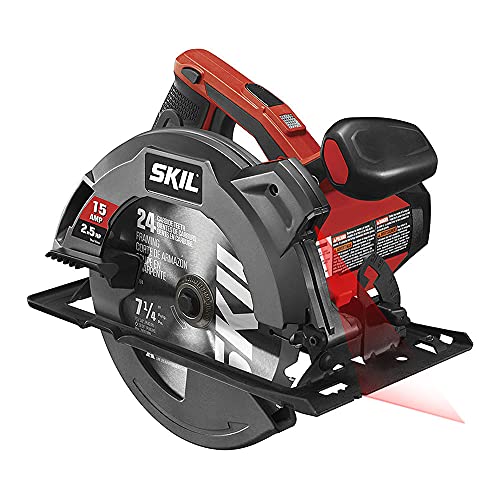
4. SKIL 15 Amp 7-1/4 Inch Circular Saw, Best budget with guide
- Amps
- 15
- Weight
- Light
- Bevel
- 0 to 51 degrees
- Blade
- 7-1/4 in, laser
- Price band
- Around $55 to $70
Fifteen amps at a budget price with a laser line thrown in. The laser is a convenience rather than an accuracy feature, but the amps are real.
Who should buy it
DIY and rough carpentry where a visible line helps and precision comes from a guide anyway.
What to watch out for
The laser washes out in daylight and does not improve the saw. Judge it on the 15 amps and the price, not the beam.
5. Skil 5080-01 13-Amp 7-1/4" Circular Saw, Best budget

- Amps
- 13
- Weight
- Light
- Bevel
- 0 to 45 degrees
- Blade
- 7-1/4 in
- Price band
- Around $40 to $55
The cheapest real 7-1/4 inch saw. Thirteen amps and a 45 degree bevel limit, and it cuts framing lumber without complaint.
Who should buy it
A saw for a project rather than a career, or a second saw to leave in a vehicle.
What to watch out for
Forty five degree bevel limit rules out compound roof work, and the base is thin. For occasional use neither matters.
Corded or cordless, honestly
When corded is genuinely better
Sustained cutting, shop use, ripping long stock and anything where the saw runs for hours. A corded saw does not fade, does not need a spare, and costs a third of the cordless equivalent once batteries are counted.
When cordless wins
Site work, roofs, anywhere without power, and quick jobs where dragging out an extension reel costs more time than the cut. Also anything up a ladder, where a cord is a genuine hazard.
The cost gap is larger than it looks
A good corded saw is around $130. The cordless equivalent is a similar price bare, plus batteries you will replace twice in a decade. We ran that arithmetic in ten years of cordless and the gap runs into hundreds.
Base plate over amps, again
Every saw here has enough power. What differs is whether the base stays flat under your weight. Cast or magnesium bases hold, stamped steel flexes. This is the specification that decides your cuts and it is never in the headline.
Pair a cheap saw with a good guide
A budget saw running on a rail cuts straighter than an expensive saw freehand. If the budget is tight, buy the cheap saw and spend the difference on a guide rail and a decent blade.
- Buy 15 amps if it is free, but do not pay extra for it.
- Cast or magnesium base beats stamped steel.
- Replace the supplied blade immediately.
- A guide rail improves any saw more than upgrading the saw does.
- Check whether the blade is left or right for your dominant hand.
For the cordless side see best cordless circular saws.
Frequently asked questions
Are corded circular saws still worth buying?
For shop use, yes, clearly. Sustained power, lower weight, and a third of the total cost once batteries are counted. Cordless wins on portability and nothing else.
How many amps do I need?
Fifteen is standard and 13 is adequate. The difference shows up in wet treated lumber and almost nowhere else. Do not trade base rigidity for amps.
What is the difference between corded saws at $50 and $130?
Base plate rigidity, adjustment quality, sightline and bearings. Not power. The cheap saw cuts the same shape, it just fights you more while doing it.
Do I need an electric brake?
It stops the blade in a second or two after release. Nice for safety and for setting the saw down quickly. Not essential, and its absence should not decide a purchase.
Can I use an extension lead?
Yes, sized properly. A long thin lead drops voltage, which makes the motor work harder and run hot. Use a heavy gauge lead and unwind the reel fully.
The bottom line
The DEWALT DWE575 is the corded saw to buy if you use one regularly. Light, rigid, and the adjustments hold, which is the entire list of things that matter.
If money is tight, buy the cheapest 15 amp saw and spend the difference on a guide rail and a 40 tooth blade. That combination out cuts an expensive saw used freehand, every time.
Leave a Reply